
DOWN THE RABBIT HOLE / BLUE BUNNY PRODUCTIONS
Two Doctors. Two Visual Languages. A Cinematographer's Perspective.
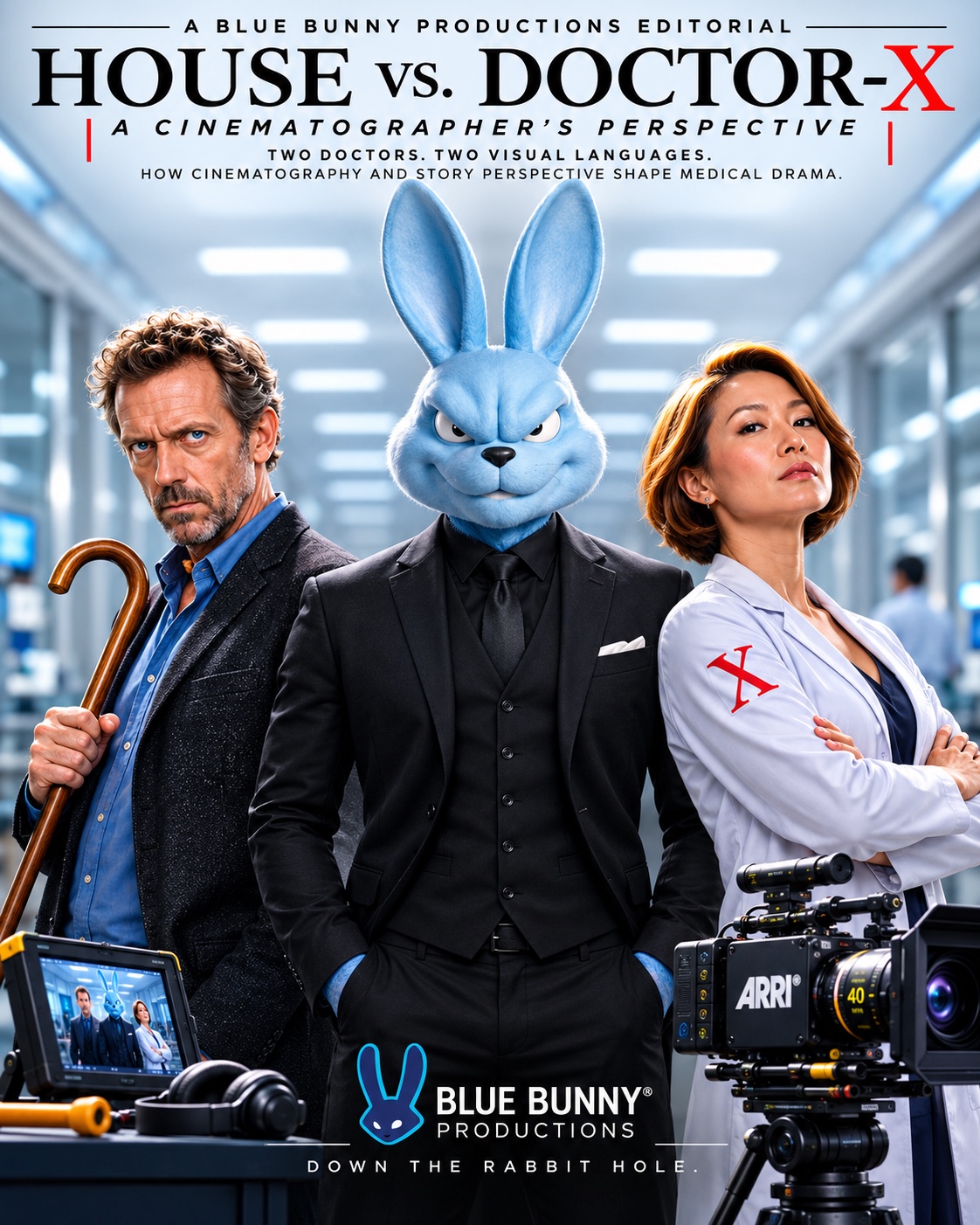
The Art of Medicine Through the Lens of Cinema
Few television genres capture the human condition quite like the medical drama. From the ensemble storytelling of St. Elsewhere to the emotional relationships of Grey's Anatomy and the immersive hospital realism of The Pitt, television has continually reinvented life-or-death storytelling.
Beyond diagnoses and operating rooms, another subject fascinates us: the cinematography that shapes how we experience these stories. Consider Dr. Gregory House, played by Hugh Laurie, and Dr. Michiko Daimon, played by Ryoko Yonekura in Japan's Doctor-X. Both are exceptional outsiders who challenge authority. Yet their visual worlds speak different languages.
HOUSE: The Camera as an Extension of the Mind
At its heart, House is a detective story disguised as a medical drama. Every symptom is a clue, every diagnosis a hypothesis, and the audience investigates alongside a brilliant but conflicted physician. Restrained colors, intimate close-ups and controlled lighting can emphasize uncertainty rather than simply celebrate his genius.
FRAME STUDY 01 — COLOR & LIGHTING
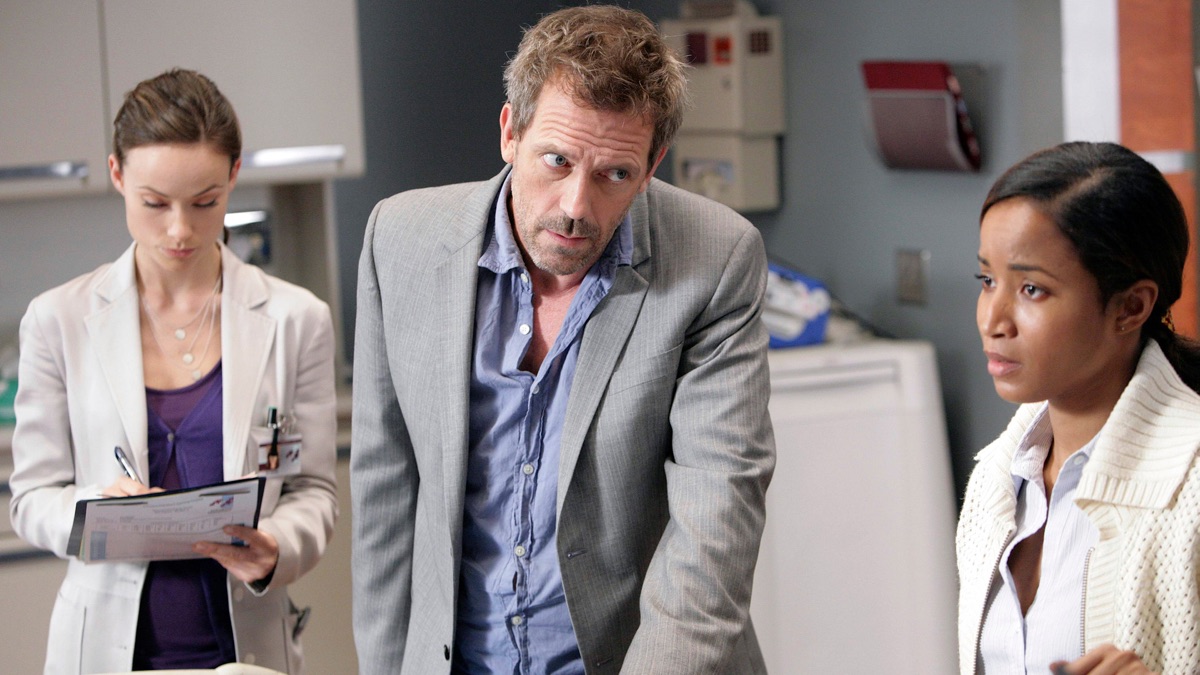
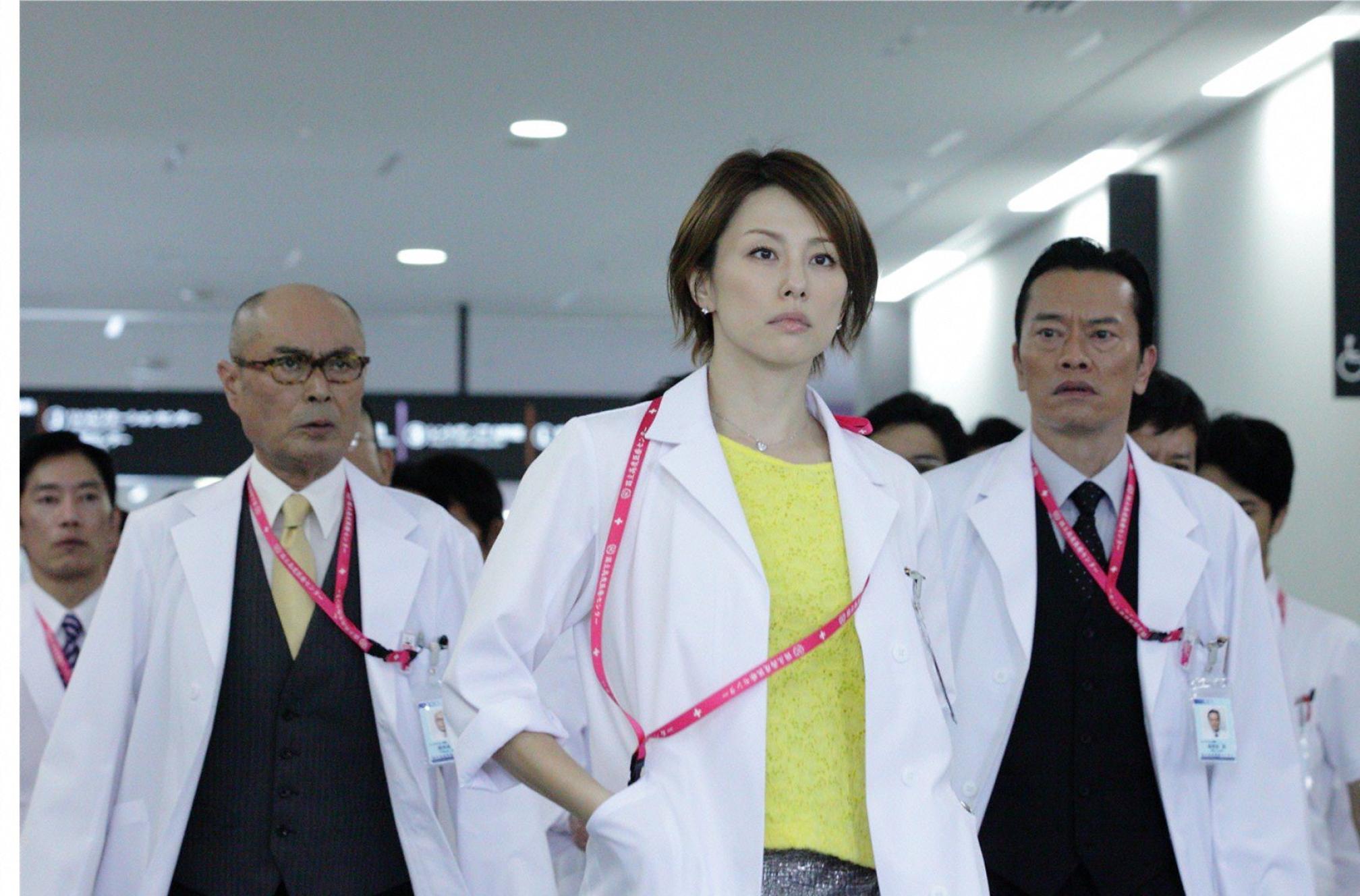
LEFT / HOUSE — Muted interiors and controlled contrast. RIGHT / DOCTOR-X — Luminous whites and assertive color accents.
THROUGH THE LENS: These selected frames suggest different dramatic priorities. House can draw attention toward uncertainty through subdued surroundings; Doctor-X can use brighter spaces and strong accents to highlight presence and authority. Neither palette defines every scene in either series.
DOCTOR-X: The Cinematography of Confidence
Where House's brilliance often generates uncertainty, Daimon's confidence generates confrontation. She refuses to conform to a hospital hierarchy. Assertive entrances, expressive reaction shots, and deliberate blocking turn the institution into an arena of power.
FRAME STUDY 02 — COMPOSITION & AUTHORITY

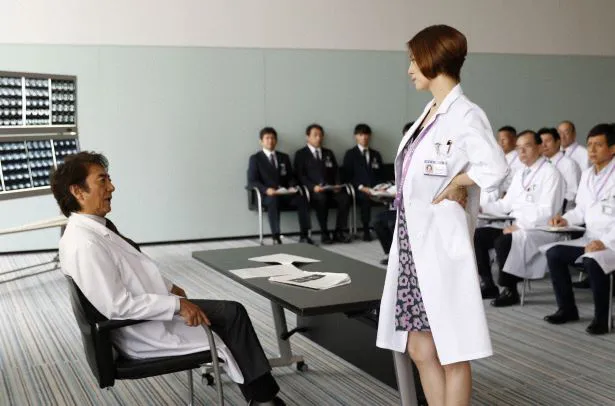
LEFT / HOUSE — The diagnostic problem anchors the frame. RIGHT / DOCTOR-X — Character positioning communicates authority.
THROUGH THE LENS: In House, a whiteboard or diagnostic discussion can organize our attention around the problem. In Doctor-X, character positioning often turns a confrontation into a visual statement of independence. One investigates brilliance; the other declares it.
SAME HOSPITAL. DIFFERENT CINEMATIC PERSPECTIVES.
Both productions use clinical-blue environments, close-ups, surgical lighting, and sharp reaction cuts. The more revealing difference is where the camera asks us to look.
FRAME STUDY 03 — THE OPERATING ROOM
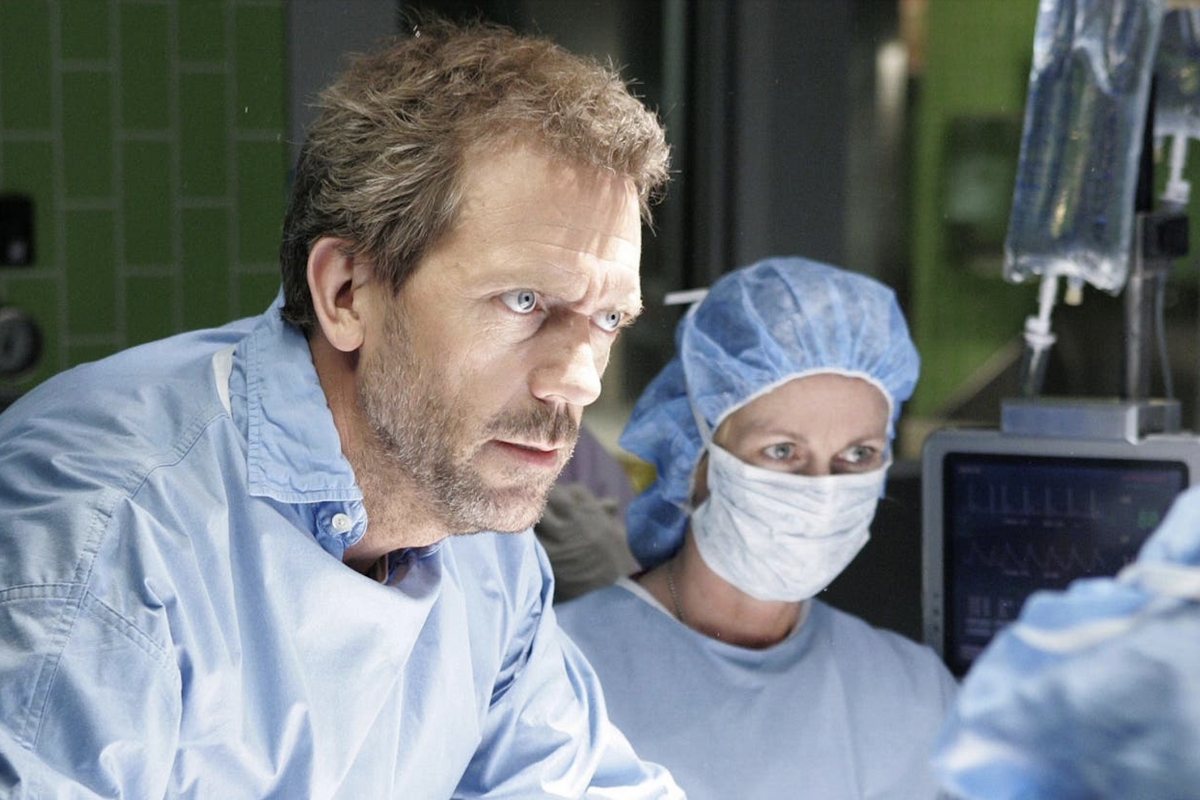

LEFT / HOUSE — Clinical context and the investigation. RIGHT / DOCTOR-X — Focus on the surgeon's concentrated gaze.
THROUGH THE LENS: In these frames, House's visual emphasis includes the complexity of the medical situation, while Doctor-X uses a more concentrated portrayal of the surgeon. Similar spaces; different centers of attention.
WHEN CAMERA CHOICE BECOMES STORYTELLING
In House's sixth-season finale, Help Me, director Greg Yaitanes and cinematographer Gale Tattersall used Canon EOS 5D Mark II cameras. Their small form factor and shallow-depth-of-field possibilities supported intimate images in confined spaces. The best camera is the one that serves the story—not necessarily the most expensive one.
WHAT WE TAKE BACK TO THE FILM SET
At Blue Bunny Productions, we work across commercial films, branded storytelling, documentaries and cinematic photography. The fundamentals are shared: lighting establishes mood, composition communicates power, lenses change perspective and editing shapes rhythm.
House shows how imagery can explore psychological complexity. Doctor-X demonstrates how images can reinforce identity and conviction. Neither approach is automatically superior; each succeeds when form serves dramatic intention.
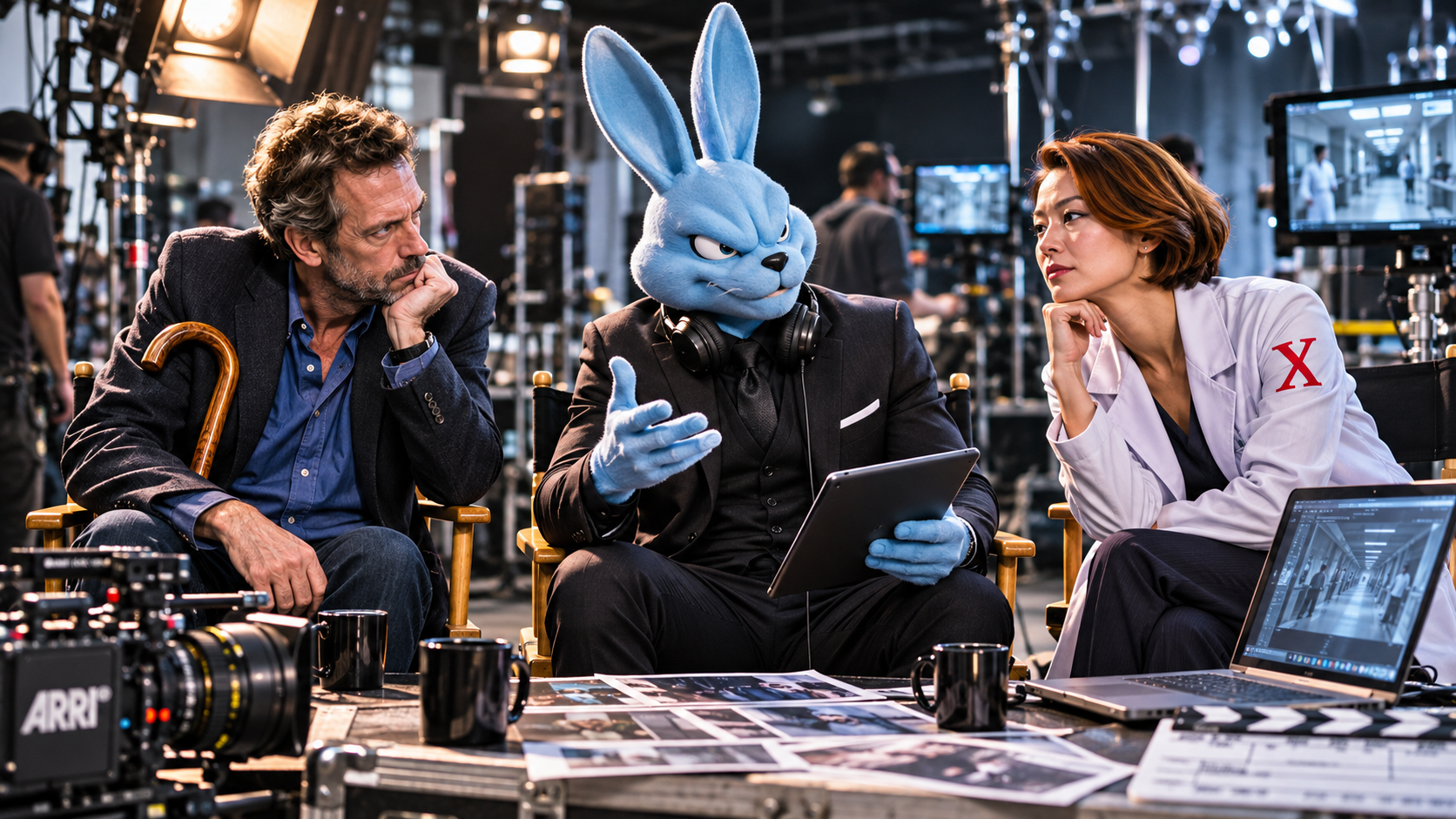
Conceptual editorial illustration produced for this article; not a photograph from either television production.
FINAL FRAME: IT'S ALL ABOUT PERSPECTIVE
The question is not which physician is more brilliant or which show is better. It is how two productions explore similar themes through different visual identities. One encourages us to question. The other invites us to believe.
The camera doesn't simply record the story. It helps tell it.
Down the Rabbit Hole | Blue Bunny Productions, Miami, Florida. Independent editorial commentary; not affiliated with House or Doctor-X. Series frames credited to their respective rights holders and original editorial/publicity sources.