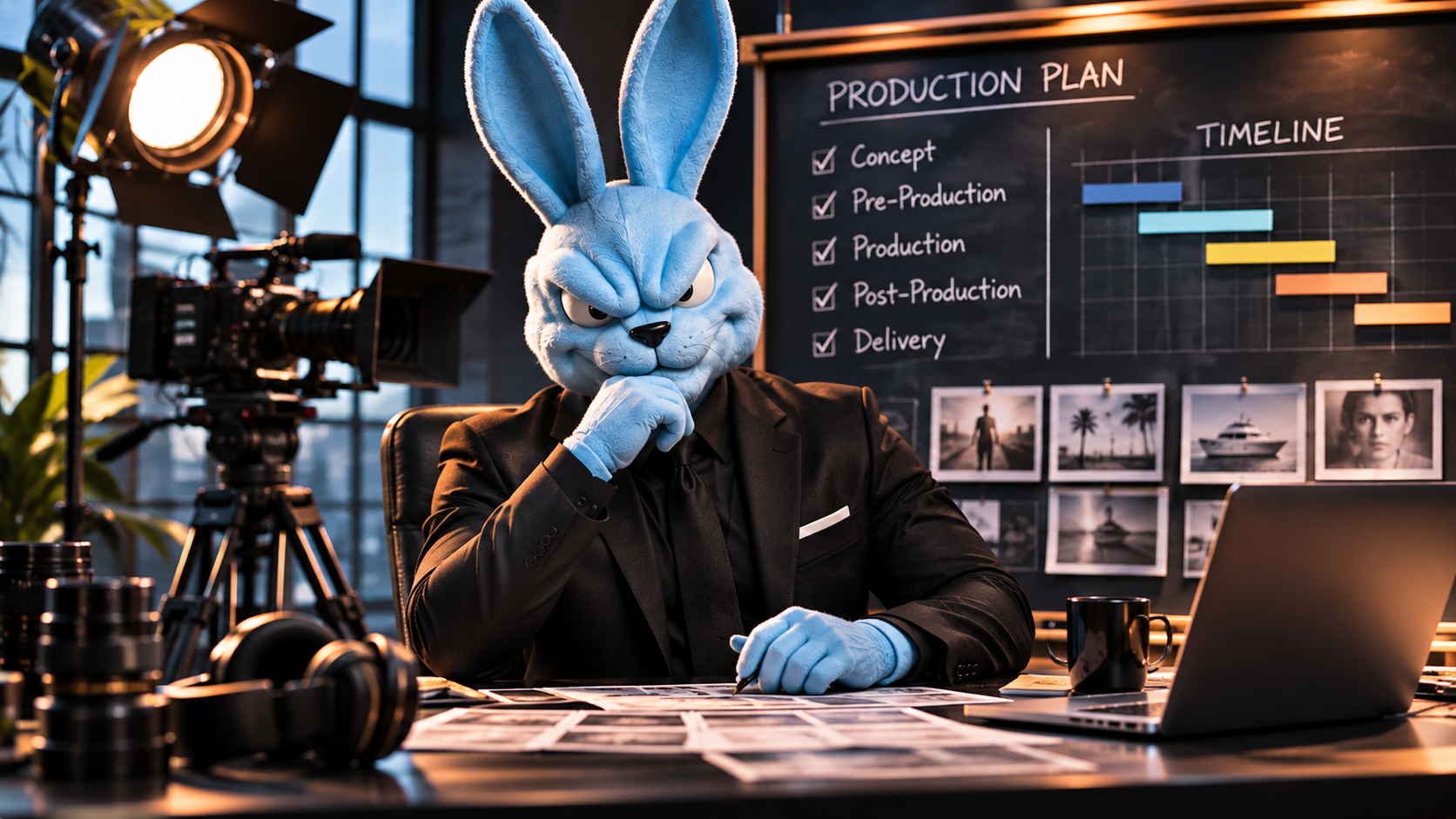
A launch date can turn a beautiful idea into a production pileup fast. The CEO is available for one hour, the location has a strict load-in window, a product sample arrives late, and three stakeholders suddenly have opinions about the edit. A video production timeline template gives the project a spine before those moving parts start pulling in different directions.
For brands, marketing teams, and organizations, the goal is not to turn filmmaking into a spreadsheet exercise. It is to protect the creative work by assigning the right time for decisions, production, review, and refinement. The strongest videos feel effortless on screen because the work behind them was planned with intention.
What a Video Production Timeline Template Should Actually Do
A timeline is more than a list of dates. It is a production agreement that shows what must happen, who owns it, what depends on it, and when a delay starts affecting the next stage. A corporate profile, social campaign, documentary short, music video, or live-streamed event will each move differently, but every project needs a clear path from brief to final master.
A useful template should account for five realities: creative development takes time, approvals can stall momentum, shoot days are unforgiving, post-production is iterative, and delivery requirements vary by platform. A 90-second brand film may need a widescreen website master, vertical social cutdowns, caption files, stills, and versions tailored for paid media. If those deliverables appear only at the end, they become expensive surprises.
The template should therefore work backward from the release date. Start with the final delivery deadline, then reserve time for client review, finishing, editing, filming, and pre-production. This reveals whether the ambition matches the calendar before crew, talent, and equipment are booked.
A Practical Video Production Timeline Template
For a typical commercial, corporate, or branded content project with a four-to-six-week runway, this framework creates enough space for craft without losing commercial urgency. The timing shifts for larger campaigns, complex locations, union talent, travel, animation-heavy work, or projects requiring many decision-makers.
| Phase | Typical Timing | Key Output | Decision That Keeps It Moving | |---|---:|---|---| | Discovery and creative brief | Week 1 | Goals, audience, message, budget range | Approve the strategic direction | | Concept and pre-production | Weeks 1-2 | Treatment, script, shot list, schedule, crew plan | Lock scope and production plan | | Production | Week 3 | Footage, sound, photography, drone or livestream assets | Confirm coverage before wrap | | Editorial and first cut | Week 4 | Structured edit with music and narrative flow | Consolidate first-round feedback | | Finishing and revisions | Week 5 | Color, mix, graphics, captions, revised cut | Approve picture and sound | | Delivery and rollout | Week 6 | Platform-specific masters and archive | Confirm all final files and usage needs |
This is a starting frame, not a promise that every project takes six weeks. A single-camera executive interview can move much faster when the message is clear and approval is centralized. A cinematic brand campaign may require eight to twelve weeks, especially if it includes casting, set design, multiple locations, original music, motion graphics, or a precise visual treatment.
Week 1: Find the Story Before Booking the Camera
The first week should answer the questions that shape every later choice: Who needs to see this? What should they feel, understand, or do after watching? Where will the video live? What does success look like?
This is where a vague request such as “we need a company video” becomes a usable creative brief. A recruitment film and an investor-facing company profile may feature the same business, but their emotional architecture is different. One might lead with culture and human energy; the other may lead with proof, scale, and leadership.
Set the approval structure here, too. Name one person who can consolidate stakeholder input. When feedback arrives as five separate email threads, the editor is forced to interpret competing creative directions. One organized response preserves both budget and momentum.
Weeks 1-2: Pre-Production Is Where the Film Gets Made
Pre-production is the quiet machinery behind a polished final image. Once the creative direction is approved, the production team develops the script or interview prompts, visual references, shot list, call sheet, location plan, crew requirements, and production schedule.
Build approval checkpoints into the template instead of treating them as informal conversations. A script approval should precede the shoot schedule. Location confirmation should precede permits, rentals, and crew calls. Talent availability should be confirmed before a final call sheet is circulated.
For Miami and South Florida productions, environmental planning deserves its own line item. Weather, traffic, midday sun, venue access, and waterfront wind can all affect the day. A schedule with realistic company moves, meal breaks, equipment setup, and a weather contingency is not cautious for the sake of it. It is how the team keeps the visual standard high when conditions get loud.
Week 3: Protect the Shoot Day
A filming day needs a schedule that is specific enough to guide the crew but flexible enough to preserve the best moments. Include call time, load-in, setup, each scene or interview block, location moves, meals, backup time, and wrap. If the plan includes drone work, factor in airspace checks, weather, and the time needed to capture a safe, considered sequence.
The most common timeline mistake is scheduling every minute around ideal conditions. Leave room for a subject who needs a second take, an executive delayed by a meeting, a lighting adjustment, or an unscripted moment that makes the piece feel alive. The point is not to fill the day. The point is to capture the footage that carries the story.
Before wrap, review essential coverage. Confirm that interviews have clean audio, product details have been captured, branded environments are represented, and any required vertical or social-first shots are in the can. A five-minute check on set can save a costly pickup day.
Weeks 4-5: Give the Edit a Clear Approval Rhythm
Post-production needs deadlines, but it also needs room for thinking. The first cut is where structure, pacing, performance, music direction, and narrative emphasis come into focus. It should not be expected to have final color, finished graphics, or every microscopic polish point resolved.
A reliable review sequence usually has three gates. First, approve the story and overall edit direction. Second, approve graphics, music, and brand details. Third, approve the finished color, sound mix, captions, and final technical checks. Each stage should have a defined feedback window, ideally one to three business days depending on the project.
Avoid making major script or message changes after picture lock unless the schedule and budget explicitly allow for them. A new opening line can affect voiceover, b-roll choices, graphics, timing, captions, and every cutdown built from the master. Creative evolution is healthy; late structural changes simply need to be treated as new work rather than invisible revisions.
Add Deliverables Before the Edit Begins
The master video is often only the center of the campaign. A smart timeline lists every planned version at kickoff: horizontal and vertical aspect ratios, 15- and 30-second cutdowns, social reels, captioned versions, silent-autoplay edits, broadcast files, event playback files, thumbnails, and still frames.
This does not mean every project needs every asset. It means the production plan should reflect how the brand intends to use the content. If a vertical social teaser is needed, capture and compose for it during production. Cropping a widescreen hero shot at the end can work, but it can also cut the subject out of the frame or flatten a carefully built composition.
The Timeline Needs a Buffer, Not Just a Deadline
A timeline without buffer is a wish. Add margin around the parts of the project that are least predictable: client approvals, shipping, permits, weather, talent scheduling, and final legal or compliance review. For a fast-moving campaign, that buffer may be a day. For a large organization with layered approvals, it may be a week or more.
Be transparent about what happens if a milestone slips. If the client needs an extra week to approve the first cut, the final delivery date may move unless the team can reallocate resources. That conversation is far easier when the dependencies are visible from the beginning.
At Blue Bunny Productions, the timeline is treated as part of the creative process, not an administrative afterthought. It gives cinematic ideas a practical runway, whether the project is a polished corporate story, a high-energy social campaign, or a multi-format content shoot.
The best final step is simple: share the timeline with every decision-maker before production begins, then use it as a living document rather than a file that disappears after kickoff. When everyone can see the next creative decision on the horizon, the production has room to move with confidence - and room for the unexpected image that makes people stop scrolling.
Use this timeline with your next production brief
A practical video timeline should list the project goal, final delivery date, pre-production milestones, creative review, locations and permits, casting or interview schedules, equipment and crew confirmations, production dates, footage handoffs, edit milestones, consolidated feedback rounds, captions and final versions. For events or launches with a fixed date, work backward from delivery and account for editing, sound, color, client approvals and contingency time. The sample week-by-week phases in this guide are illustrative, not guaranteed turnaround times. Share your target dates and scope with your Miami production team before committing to the calendar.
Explore full-service Miami video production, planning and post-production.
Have a commercial, corporate film or event shoot with a deadline? Share your timeline and request a production estimate.